

In-Home Feeding Therapy for Children from Birth to Age 3
Serving families in Chicago's West and Southwest suburbs for over 22 years
Our Mission
At Nourished Beginnings, we’re here to make mealtimes feel safe, stress-free, and enjoyable for your whole family.
Our Specialties
We support parents through all types of feeding challenges, including breastfeeding, bottle-feeding, tube-weaning, and the transition to solid foods.
Why Work With Us
Our feeding experts come to you! We’ll work together to help your child become a happy eater, all from the comfort of your home.

Welcome to Nourished Beginnings!
You don’t have to navigate your child’s feeding challenges alone.
Feeding challenges can take a tremendous emotional toll on families. Whether you’re concerned about nursing, bottle-feeding, fussiness, starting solids, chewing, swallowing, or navigating complex medical needs, you don’t have to figure out the next steps on your own.
At Nourished Beginnings, we’re here to help you make sense of what’s happening and take that weight off your shoulders. With decades of experience supporting families in their homes, our feeding experts take a responsive, parent-centered approach that considers the whole picture while honoring your child, your routines, and your family’s values.
Together, we'll look at every piece of the puzzle, move at your child's pace, and make a clear plan— so you can spend less time worrying about what to do and more time enjoying moments with your child.
Nourished Beginnings Serves Chicago's West and Southwest Suburbs
In-Home Pediatric Feeding Therapy Services for Babies, Toddlers, and Young Children

-
During your first appointment, our pediatric feeding experts will evaluate your child’s feeding strengths and challenges.
In order to pinpoint the underlying reasons that your child may be struggling with feeding, we’ll gather information from:
Parent/caregiver interviews
Review of medical history
Skilled observation of a typical feeding/mealtime in your child’s most natural setting
Informal and/or formal assessments
Once the evaluation is complete, we’ll schedule a meeting to share our findings, discuss recommendations, and make a plan for moving forward in feeding therapy. We’ll also refer you to other medical providers if necessary.
Please note that feeding evaluations take 60-120 minutes.
-
If your baby tires easily, struggles to take enough milk, seems uncomfortable or fussy during feeds, or feeding takes far longer than expected, we can help!
Our feeding therapy sessions will give you hands-on support to help you and your baby:
Make feedings comfortable, efficient, and stress-free
Experience less fatigue during feeds
Adapt to feeding routines and schedules
Get adequate nutrition from breastfeeding and/or bottle feeding
Babies who have spent time in the NICU, were born prematurely, or have complex medical histories may experience feeding challenges that require a thoughtful, individualized approach. We bring more than two decades of clinical experience to helping families meet their baby’s individual feeding needs!
-
Tube feeding can be an important part of a child's medical journey, but parents are often left wondering whether it’s permanent or what comes next.
If you’re looking to help your child develop oral feeding skills, we’ll work closely with your family to help them:
Safely progress to eating by mouth
Get comfortable accepting more foods and oral experiences
Successfully wean from the G-tube when appropriate
-
If your child has had medical trauma or if mealtimes have become stressful and traumatic, your whole family may feel stuck in a cycle of worry, pressure, and frustration.
We take a responsive feeding approach that focuses on understanding the experiences that may be affecting your child's relationship with feeding and food, following their cues, and creating a plan that meets them where they are.
Our trauma-informed feeding therapy sessions will guide you on how to support your child physically, developmentally, and mentally so they can:
Have positive eating experiences
Feel comfortable exploring and interacting with food
Develop new feeding skills at their own pace
Enjoy mealtimes with family
-
Moving from milk and formula to purees and solid foods is an exciting milestone, but it does not always happen as easily as families expect.
If your child is not interested in food, struggles to move food around in their mouth, has difficulty chewing, or seems unsure of what to do once food is in their mouth, feeding therapy can help.
We'll focus on the underlying skills your child needs for eating and create an individualized plan to help them:
Chew and swallow table foods
Transition away from the bottle
Eat a variety of purees and solid foods
Enjoy the same meals as the rest of the family

Meet Your Pediatric Feeding Therapist
Welcome!
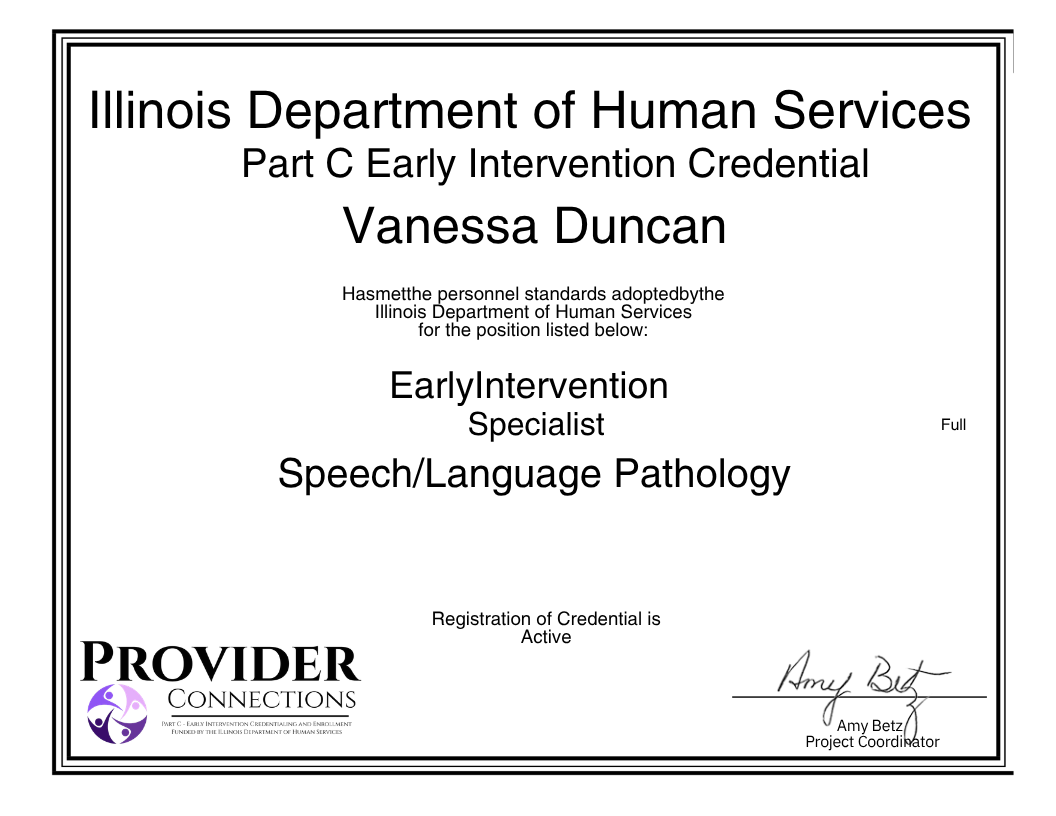
I’m Vanessa Duncan, M.S., CCC-SLP
In my 22+ years of clinical practice, I've helped people of all ages navigate communication and feeding needs, but my greatest passion is helping babies, toddlers, and parents experience stress-free mealtimes.
As an Early Intervention clinician and a mother myself, my approach with families is rooted in communication and building trust, while my intervention and treatment are guided by evidence-based research in responsive and cue-based feeding approaches. I am also certified in the SOFFI method (Supporting Oral Feeding in Fragile Infants) for the assessment and intervention of disordered feeding, helping to guide caregivers back to being their child's primary feeder.
At Nourished Beginnings, I'll help you understand what's happening beneath the surface, why it may be happening, and what you can do to make feedings and mealtimes easier at home. You'll leave each session feeling supported, capable, and confident in the role you play in your child's feeding journey.
You don't have to do this alone. I'll be there for every step!
Advanced Trainings & Certifications


Who We Serve
Ages Served
Nourished Beginnings provides pediatric feeding therapy for babies and toddlers, from birth to 3 years old.
Settings
In-home feeding therapy is available to families in Lemont, IL, and throughout the West and Southwest suburbs. We also offer online feeding therapy for families anywhere in IL
Specialties
NICU & Pre-Term Babies · Dysphagia · Tube Weaning · Trauma · Medically Complex Children
Searching for a “pediatric feeding therapist near me”?
You’re in the right place! Nourished Beginnings is accepting new clients!
Get Started With 3 Easy Steps:
Nourished Beginnings travels to provide in-home feeding therapy for families and children in Chicago's West and Southwest suburbs.
1) Free Consultation
Schedule a complimentary phone call to share your concerns and determine if our services are the right fit for your family’s needs. If so, we will book an evaluation appointment.
2) Evaluation
We’ll meet in your home to evaluate your child's feeding skills and challenges. We will also review past medical history and discuss your concerns more in-depth.
3) Make a Plan
After the evaluation is complete, we’ll discuss the results together, answer your questions, and determine whether in-home feeding therapy is recommended.

Frequently Asked Questions About Feeding Therapy
-
Absolutely! Babies in the NICU have been through, and may still be going through, a lot of complications, healing, and growth.
Feeding therapy can help a child gain the skills necessary for safe and efficient feeding and help with transitions to oral feedings.
The SOFFI method (Supporting Oral Feedings in Fragile Infants) utilizes trained clinicians to assess and then treat the child struggling with oral feeding, while coaching the parent/caregiver on ways to read their child's cues and feel successful feeding them.
-
Every child is different, as are the needs and reason(s) for needing a feeding tube.
However, with help and guidance from a pediatric feeding specialist, many children will successfully transition to safely eating by mouth and relying less, if at all, on a feeding tube.
-
Tube weaning can be done safely at home when it is guided by a trained clinician and coordinated with your child’s medical team.
That collaboration ensures safety and allows everyone to determine the best time to begin.
One of the many benefits of in-home tube weaning with a pediatric feeding specialist is consistent monitoring and teaching of the skills necessary for safe and pleasurable oral feeds.
-
A comprehensive feeding evaluation is a great place to start to see if your child is having difficulties transitioning from breast or bottle to solid foods.
This will help the pediatric feeding specialist determine whether a delay or aversion is contributing to the transition difficulty and, if so, what the next steps are to help the parent and child successfully move to eating and enjoying more solid foods.
-
Tethered oral tissues (TOTs) are short and/or taut, fibrous membranes that can be found under the tongue, behind the upper and/or lower lip, and along the cheek and gum lines.
Sometimes TOTs affect feeding, and sometimes TOTs do not affect feeding.
A comprehensive evaluation by a pediatric feeding specialist or other trained clinician is best practice to determine if a lip-tie or tongue-tie is present and, if so, whether it’s contributing to any feeding issues.
-
A child will gag while eating if food or liquid is not controlled well inside the mouth, slips back too far, and triggers the gag reflex.
This is typical and common when children are learning how to eat and can happen quite regularly with new foods, tastes, textures, and sizes of bites presented.
As children develop their oral feeding skills, gagging may still happen occasionally, though typically decreases in occurrence.
Frequent gagging and choking (food or liquid entering the airway, obstructing breathing) is typically a cause for concern and may require a screening or evaluation by a pediatric feeding specialist to determine what may be causing a delay in feeding skills.
-
Yes! This is one of the most common areas that feeding therapy addresses with children.
Through individualized treatment plans and techniques based on Responsive Feeding, which follows the child’s cues, feeding therapy will help the child feel safe while eating, help parents/caregivers recognize and respond to the cues their child is giving during meals, and create more pleasurable feeding experiences for everyone.